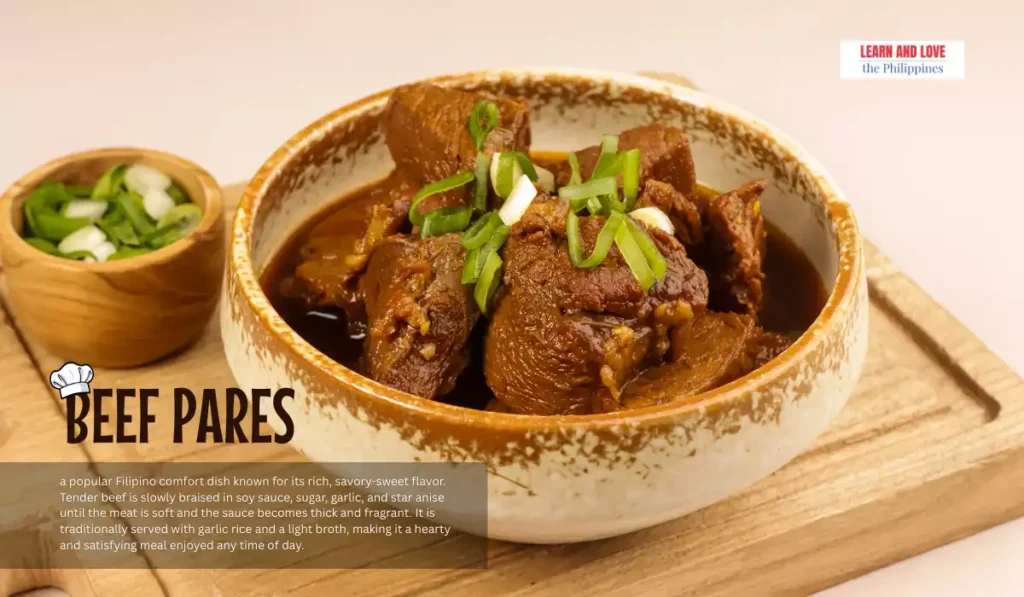
Want to cook Beef Pares ?
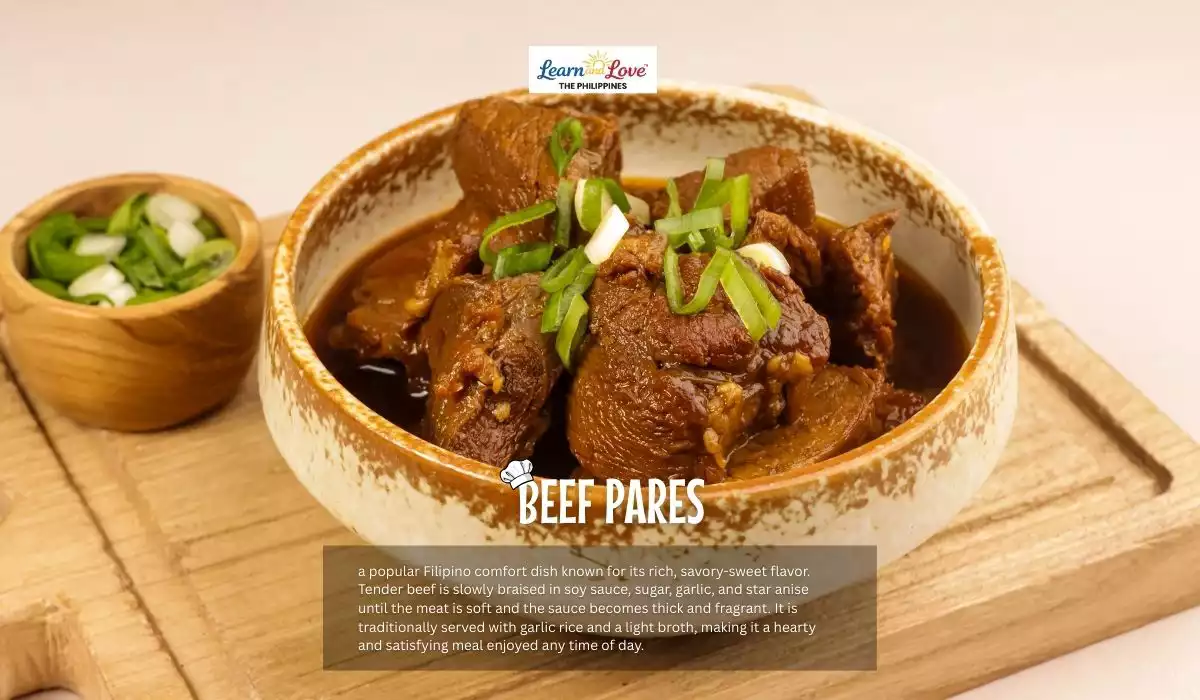
Learn to cook beef pares through this recipe. Beef Pares is one of the most beloved comfort foods in the Philippines, instantly recognizable for its deep brown color, glossy sauce, and unmistakable aroma of garlic and star anise.
The word pares means “pair,” referring to how the dish is traditionally served—with garlic fried rice (sinangag) and a light beef broth. This trio creates a balanced meal: rich and savory beef, fragrant rice, and a warm soup that cleanses the palate.
What sets Beef Pares apart is its unique flavor profile. To cook beef pares the right way, one has to combine salty, sweet, and aromatic elements in one dish. Soy sauce provides depth and umami, sugar adds gentle sweetness, garlic delivers bold fragrance, and star anise contributes a subtle licorice note that defines classic pares.
The beef is cooked slowly until tender, allowing the flavors to fully penetrate the meat and develop a thick, almost syrupy sauce.
Originally popular as affordable street food, Beef Pares has since evolved into a dish enjoyed in homes, carinderias, food parks, and even upscale Filipino restaurants.
Despite variations among those who cook beef pares—some thicker, some soupier, some sweeter—the soul of this popular Manila dish remains the same: simple ingredients transformed through time and patience into something deeply satisfying.
Whether eaten late at night, after a long workday, or during family meals, Beef Pares holds a special place in Filipino food culture.
Recipe
While Beef Pares recipes may differ slightly from cook to cook, the method remains straightforward. The key lies in tenderizing the beef properly and allowing the sauce to simmer long enough for the flavors to blend.
Ingredients
-
1 kilo beef brisket or chuck, cut into cubes
-
1 head garlic, minced
-
1 medium onion, chopped
-
3 tablespoons soy sauce
-
2 tablespoons oyster sauce
-
2–3 tablespoons brown sugar (adjust to taste)
-
1 teaspoon ground black pepper
-
2 pieces star anise
-
1 beef broth cube (optional)
-
Water (enough to cover the beef)
-
Cooking oil
Instructions on how to cook beef pares
-
Tenderize the beef. Place the beef in a pot and cover with water. Bring to a boil, then lower the heat and simmer until the meat becomes tender. Skim off any impurities that rise to the surface. Once tender, remove the beef and reserve the broth.
-
Sauté the aromatics. In a separate pan or pot, heat cooking oil over medium heat. Sauté the minced garlic until lightly golden, then add the onions and cook until soft and fragrant.
-
Build the flavor. Add the cooked beef to the pan. Pour in soy sauce, oyster sauce, brown sugar, black pepper, and star anise. Stir well to coat the beef evenly with the seasoning.
-
Simmer the sauce. Add some of the reserved beef broth and, if desired, the beef broth cube. Let the mixture simmer over low heat for 20 to 30 minutes, stirring occasionally, until the sauce thickens and develops a glossy finish.
-
Adjust and serve. Taste and adjust the seasoning, adding more sugar or soy sauce if needed. Serve hot with garlic rice and a bowl of clear beef soup made from the remaining broth.
Check our this video from Panlasang Pinoy | YouTube on how to cook beef pares.
Serving Tips
Beef Pares often tastes better the next day, as resting allows the flavors to deepen. Many vendors intentionally cook it in advance and reheat it slowly for even richer results.
Brief History of Beef Pares in Manila
Beef Pares traces its roots to the bustling streets of Manila, where food vendors have long served affordable, filling meals to workers, drivers, and night owls. Many believe beef pares’ rise in popularity began in the 1970s in Quezon City.
The city’s vibrant street food culture, particularly in areas known for late-night dining such as Retiro Street in Quezon City, eventually became synonymous with pares stalls.
In its early days, Beef Pares was designed to be practical. Beef cuts that required longer cooking times were simmered until tender, maximizing flavor while keeping costs manageable.
The pairing of beef with rice and soup ensured customers felt full, making pares an ideal meal for laborers and commuters looking for value and comfort.
Chinese culinary influence also played a role in shaping Beef Pares. The use of soy sauce, star anise, and slow braising techniques reflects elements commonly found in Chinese-style beef dishes.
Over time, Filipino cooks adapted these flavors to local tastes, adding sweetness and garlic-forward notes that appealed to a broader audience.
As pares stalls multiplied, each developed its own signature style. Some favored thicker, sweeter sauces; others preferred lighter versions with more broth.
Despite these differences, the essential combination of tender beef, savory-sweet sauce, rice, and soup remained constant. What began as humble street fare gradually gained mainstream acceptance, appearing in food courts, restaurants, and home kitchens.
Today, Beef Pares stands as more than just a dish—it is a symbol of Manila’s food heritage. It represents resilience, creativity, and the Filipino talent for transforming simple ingredients into something comforting and memorable.
From roadside stalls to restaurant menus, Beef Pares continues to tell the story of a city and its people, one flavorful serving at a time.